Written by the Casa Goliana team in Roma Norte. Last updated 11 August 2026.
The short answer
Día de Muertos 2026 falls on Sunday 1 November (for children who have died) and Monday 2 November (for adults). Public celebrations in Mexico City build from around 25 October, the city’s official parade is traditionally held on the Saturday nearest 2 November — which points to Saturday 31 October 2026, pending the city government’s announcement in September — and the single most powerful night is 2 November, when families keep vigil in the cemeteries of Mixquic and San Gregorio Atlapulco until dawn.
This guide covers the whole season. If you want the parade specifically — route, timing, where to stand — we keep a dedicated page: the Day of the Dead Parade Mexico City 2026 guide.
The 2026 dates, day by day
| Date | Day | What happens |
|---|---|---|
| Mid-October | — | Pan de muerto appears in every bakery. Cempasúchil marigolds arrive at Mercado de Jamaica. Ofrendas start going up in offices, schools and shop windows. |
| ≈ 25 Oct | Sun | The Zócalo mega-ofrenda is installed and the Centro Histórico fills with public altars. The UNAM Megaofrenda opens at Ciudad Universitaria. |
| Late Oct | — | Catrina processions (Mega Procesión de Catrinas) and neighbourhood parades. Dates are confirmed in September. |
| Sat 31 Oct | Saturday | Expected date of the city’s Desfile de Día de Muertos, traditionally the Saturday nearest 2 November. Also Halloween, which in Mexico City means children in costume — a separate, overlapping tradition. |
| Sun 1 Nov | Sunday | Día de los Angelitos / Todos los Santos. The day for children who have died. Ofrendas carry toys, sweets, sugar skulls and white flowers. Quieter, more domestic. |
| Mon 2 Nov | Monday | Día de Muertos / Fieles Difuntos. The day for adults. Families go to the cemeteries. In Mixquic, the Alumbrada fills the graveyard with candles after dark and runs deep into the night. This is the emotional centre of the whole season. |
| 3 Nov | Tuesday | Altars come down. The city exhales. A very good day to be in a museum with no queue. |
A word on the parade date. The Desfile de Día de Muertos is a modern invention — it was created in 2016, inspired by the opening sequence of a James Bond film, and it has become genuinely popular. Because it is organised by the city government rather than fixed by tradition, its date moves. Recent editions have been held on the Saturday closest to 2 November. In 2026 that is Saturday 31 October. The city publishes the official date, route and start time in September; we update our parade page the day it is announced, so check there before you fix your flights around it.
What Día de Muertos actually is
It helps to get one thing straight before you arrive: this is not a Mexican Halloween, and it is not a festival of death. It is a homecoming.
The belief at its heart is that on these two nights the dead are permitted to return, and that they arrive hungry and tired from the journey. So the living prepare. They build an ofrenda — an offering, not an altar of worship — and load it with the things that particular person loved: their brand of cigarettes, a bottle of their mezcal, the mole their mother made, a football shirt, a photograph. They lay a path of marigold petals so the dead can find the door. Then they sit with them.
The tradition braids two roots: pre-Hispanic Mesoamerican practices around death and the cycle of maize, and the Catholic feasts of All Saints and All Souls brought by the Spanish. UNESCO inscribed the indigenous festivity dedicated to the dead on its Representative List of the Intangible Cultural Heritage of Humanity in 2008.
What that means for you as a visitor is simple. Almost everything you will see is either a public celebration designed to be shared — the parade, the Zócalo, the Catrinas — or a private act of remembrance you have been allowed to witness. Knowing which one you are standing in front of is the whole of the etiquette.
How to read an ofrenda
Once you know the vocabulary, every altar in the city becomes legible. The classic ofrenda is built in levels — two, three or seven, depending on the family and the region — and each element is there for a reason.
| Element | Spanish | Why it is there |
|---|---|---|
| Marigolds | Cempasúchil | The colour and scent guide the dead home. Petals are scattered in a path from the street to the altar. |
| Candles | Veladoras | Light for the journey. One candle per soul being received. |
| Photograph | Retrato | Names the person. Without it, the ofrenda is for no one in particular. |
| Water | Agua | The dead arrive thirsty after a long road. |
| Salt | Sal | Purification; it keeps the body incorrupt for the return trip. |
| Bread | Pan de muerto | The offering of food; its bone-shaped strips represent the deceased. |
| Sugar skulls | Calaveritas de azúcar | Named on the forehead — often for the living, cheerfully. |
| Cut paper | Papel picado | The wind moving it is the presence of the spirits. |
| Incense | Copal | Pre-Hispanic resin; the smoke cleanses the space and carries prayers. |
| The favourite things | — | Tequila, cigarettes, a guitar, a jersey, mole. This is the part that will move you. |
| Dog figure | Xoloitzcuintle | The hairless dog that guides souls across the river of the underworld. |
Where to go in Mexico City
The Zócalo mega-ofrenda
The city builds an enormous themed installation in the main square, free and open to all, usually from around the last week of October until 2 or 3 November. It is spectacular, it is crowded, and it is the easiest introduction. Go early in the morning or after 9 pm if you want photographs without a thousand people in them. From Roma Norte, Metro Line 1 to Pino Suárez or a 15-minute car ride.
The UNAM Megaofrenda
At Ciudad Universitaria, students and faculty build a monumental themed ofrenda on Las Islas, usually dedicated each year to a figure or a theme from Mexican culture. It is the most conceptually ambitious altar in the city and it is free. Metrobús Line 1 south along Insurgentes takes you almost to the door.
Coyoacán and San Ángel
The southern colonial neighbourhoods do Día de Muertos at a human scale: altars in doorways, plaza-side stalls, marigolds by the armful, and a completely different atmosphere from the Centro. The Casa Azul in Coyoacán builds an ofrenda for Frida Kahlo. Museo Anahuacalli, Diego Rivera’s black volcanic-stone temple of a museum, mounts one of the most beautiful ofrendas in the country. Combine either with our Coyoacán and Frida concierge walk.
The cemeteries of the centre
Panteón de San Fernando, near the Alameda, and the Panteón Civil de Dolores in Chapultepec both open for the season with guided visits. These are historic cemeteries rather than family vigils, which makes them a gentler place to start than Mixquic.
Roma Norte itself
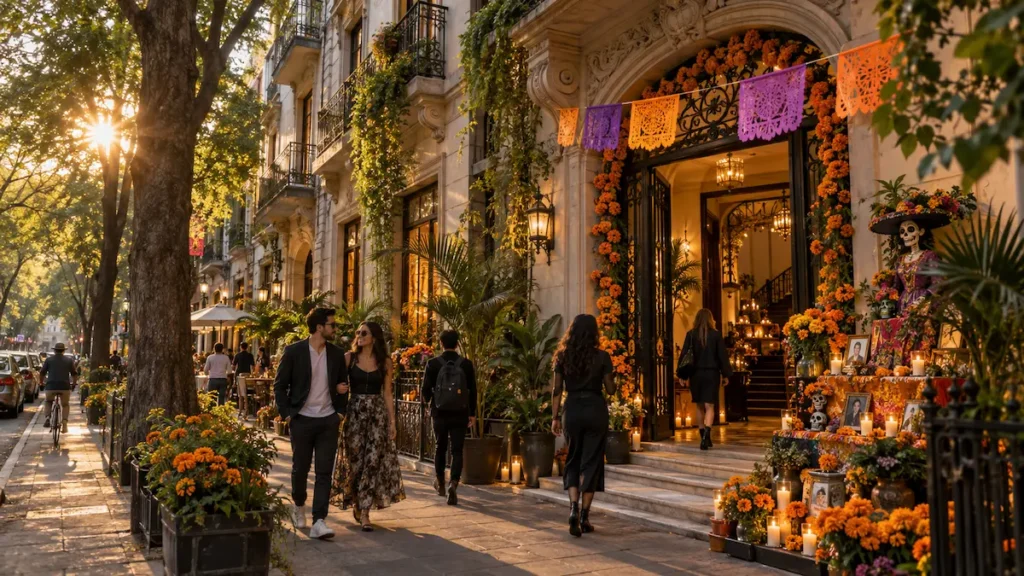
You do not have to leave the neighbourhood to be inside the season. Cafés, galleries, restaurants and the market all build ofrendas; Álvaro Obregón fills with papel picado; and the Sunday market on Zacatecas turns orange with cempasúchil. It is a good place to be based precisely because you can step out of the intensity when you need to — see our complete Roma Norte guide.
Mercado de Jamaica
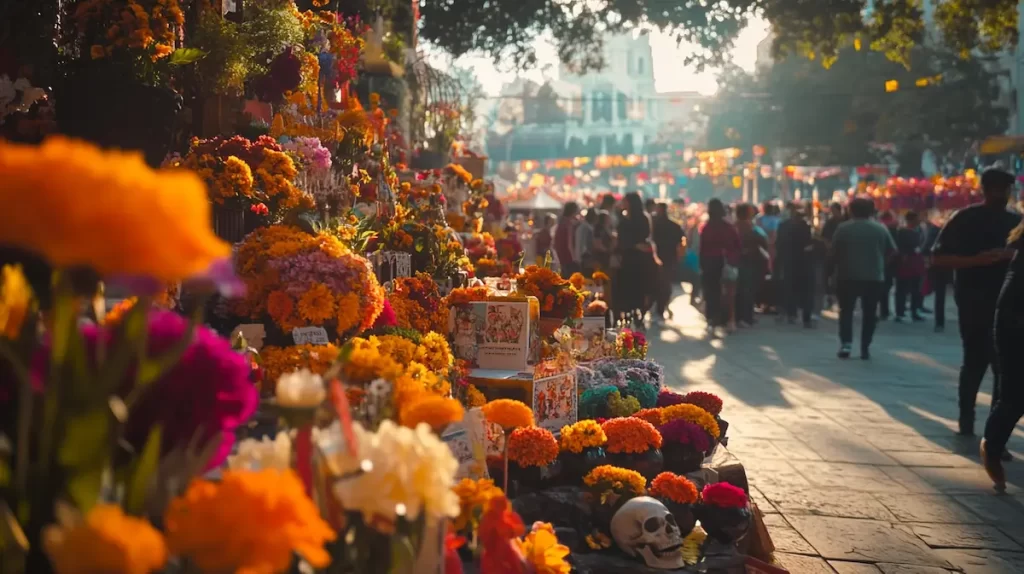
Mexico City’s flower market, and in the last ten days of October the single most photogenic place in the city: aisle after aisle of cempasúchil and blood-red cresta de gallo, floor to ceiling. It is a working market, busiest before dawn. Include it in a market morning — we have mapped the whole circuit in the best markets in Mexico City.
Mixquic and Xochimilco: the night of 2 November
If you only do one thing, do this one.
San Andrés Mixquic, a former lake town now inside the Tláhuac borough at the far southeast edge of the city, holds the most famous vigil in the Valley of Mexico. On the night of 2 November the cemetery beside the 16th-century Augustinian church fills with families cleaning and decorating graves, and at nightfall thousands of candles are lit at once. It is called La Alumbrada. The town is small, the crowds are enormous, and the atmosphere is unlike anything else — food stalls and brass bands at the gate, absolute quiet at the graveside.
Practicalities matter here more than anywhere:
- It is roughly 40 km from Roma Norte. Allow two hours each way on the night, sometimes more. Traffic in and out of Tláhuac is severe.
- Go with a driver or an organised tour, not on your own in a rental car. Parking does not exist.
- Arrive before dark to walk the town while it is still calm, and stay for the lighting.
- Bring cash, sturdy shoes, a warm layer, and patience.
- Our concierge arranges private transport and a guide for guests — ask us well in advance, because we cap it.
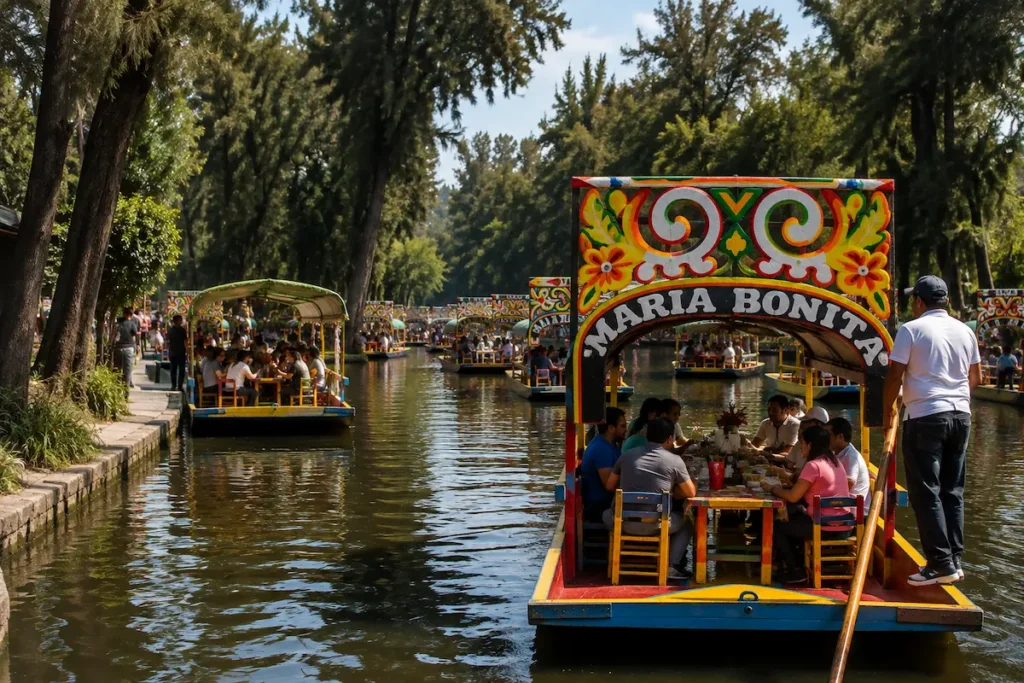
Xochimilco offers a gentler alternative closer to the city: candlelit trajinera rides through the canals on the nights of 1 and 2 November, and the cemetery vigil at San Gregorio Atlapulco, which is genuinely local and far less overrun than Mixquic. Seasonal night-time theatrical productions of La Llorona run on the water most years around these dates.
What to eat and drink in the season
- Pan de muerto. A soft, orange-blossom-scented bread crossed with strips of dough shaped like bones, dusted in sugar. Every bakery makes a version and everyone has a favourite; the good Roma Norte bakeries sell out by mid-morning. Eat it with hot chocolate.
- Calaveritas de azúcar. Sugar skulls with a name written across the forehead in coloured icing. Buy one with your own name — it is the joke and the point.
- Champurrado and atole. Thick, warm, masa-based drinks that are exactly right for a cold night in a cemetery.
- Mole and tamales. The food most often placed on the ofrenda, and therefore the food most often eaten around it.
- Mezcal. Poured for the dead first, then for you. Our concierge runs a mezcal tasting that explains why.
For where to eat the rest of the time, see our guides to the best restaurants in Roma Norte and tacos and street food.
How to be a good guest
Mexicans are, in our experience, delighted that foreigners want to take part. The only thing that offends is treating a family’s grief as a backdrop.
- Ask before photographing people, always — and never photograph a family at a graveside without permission. In a cemetery, put the camera away by default.
- Do not touch an ofrenda or take anything from it, including food. It has been placed for someone.
- Face paint has a place. Parades, processions, public festivities: yes, join in. Cemeteries and family vigils: arrive with a clean face.
- Keep your voice down in the cemeteries. Music and laughter are welcome — they belong to the families. Tourist volume does not.
- Buy from the makers. The sugar skulls, the papel picado and the cempasúchil at the markets support the artisans who keep the tradition alive. See our artisan shopping guide.
- Learn one sentence. “¿Para quién es la ofrenda?” — who is the offering for? — has opened more conversations for our guests than any other question in Mexico.
Planning: booking, crowds, weather, getting around
| Book your hotel | 3–6 months ahead. Roma Norte, Condesa and the Centro sell out earliest. This is the second-busiest date of the Mexico City year. |
|---|---|
| Ideal length of stay | 4–5 nights, arriving 29 or 30 October and leaving 3 November. Anything shorter and you will choose between the parade and Mixquic. |
| Weather | Early November is one of the best windows of the year: dry, blue skies, 22–24 °C by day, 8–11 °C at night. Bring a real jacket for the cemeteries. |
| Altitude | 2,240 m. Do not plan Mixquic for your first night in the country. |
| Getting around | Metro and Metrobús run normally and are the fastest option on parade day, when Reforma and the Centro close to traffic. Ride-hail surges hard on the night of 2 November. |
| Cash | Markets, cemeteries, street stalls and the towns are cash-only. Bring small notes. |
| Public holiday | 2 November is observed in Mexico; expect banks and many offices closed and museums busy. |
For the wider seasonal picture, see the best time to visit Mexico City, month by month, and for arrival logistics, the airport to Roma Norte transport guide.
A five-day Día de Muertos itinerary
| Day | Plan |
|---|---|
| Thu 29 Oct | Arrive. Walk Roma Norte slowly to acclimatise — the plazas, Álvaro Obregón, an early dinner. Nothing ambitious on altitude day one. |
| Fri 30 Oct | Mercado de Jamaica at 8 am for the marigolds, then the Centro Histórico and the Zócalo mega-ofrenda. Afternoon: Museo Anahuacalli’s ofrenda. |
| Sat 31 Oct | The city’s parade, expected this day. Stand on Reforma rather than at the Zócalo end. Evening: Roma Norte, where Halloween and Día de Muertos collide cheerfully. See the nightlife guide. |
| Sun 1 Nov | Día de los Angelitos. Coyoacán and San Ángel for neighbourhood altars, the Casa Azul, and the calmest, most domestic day of the season. Long lunch. |
| Mon 2 Nov | Rest in the morning. Leave for Mixquic mid-afternoon with a driver. Stay for the Alumbrada. Home very late. |
| Tue 3 Nov | The empty city. Museums with no queue, a last long breakfast, fly out. |
Prefer to build your own? Start from our 3-day Mexico City itinerary and slot the Día de Muertos nights into it, or add a day trip on 3 November.
Beyond Mexico City: Hanal Pixán in Yucatán
The Yucatán Peninsula keeps its own version, Hanal Pixán — “food of the souls” in Maya — with mucbipollo, a large pib-baked tamal cooked underground, and altars laid with a distinct Maya vocabulary. Mérida holds the Paseo de las Ánimas, a candlelit procession from the general cemetery to the Arco de San Juan, usually in the last days of October. If you want a second, quieter chapter to the same story, read our Mérida guide — we also have a three-bedroom house there that you rent whole.
Frequently asked questions
What are the Day of the Dead dates in 2026?
Día de Muertos falls on 1 and 2 November every year, and 2026 is no exception. Sunday 1 November 2026 is Día de los Angelitos, for children who have died. Monday 2 November 2026 is Día de Muertos proper, for adults. Public celebrations in Mexico City run from roughly 25 October, and the busiest single night is 2 November.
When is the Day of the Dead parade in Mexico City in 2026?
The Desfile de Día de Muertos is organised by the Mexico City government and its date is confirmed each September. It is traditionally held on the Saturday nearest to 2 November, which in 2026 points to Saturday 31 October. Treat that as expected rather than official until the city publishes the route and time — we update our parade page as soon as it does.
Is Day of the Dead a sad occasion?
No. Día de Muertos is a welcome, not a mourning. Families build an ofrenda with the food, drink and objects the dead person loved, so they have something to enjoy on the one night they return. Cemeteries are full of music, candles and conversation. It is emotional, but it is not sombre.
Where can you see real ofrendas in Mexico City?
The mega-ofrenda in the Zócalo is the largest and easiest to reach. The UNAM Megaofrenda at Ciudad Universitaria is the most artistically ambitious. For altars in a domestic context, visit the San Andrés Mixquic cemetery in Tláhuac on the night of 2 November, or Coyoacán and San Ángel, where households and museums build their own.
Should I paint my face as a Catrina?
In the parades, the Catrina processions and the public festivities, yes — it is expected and Mexicans of every age do it. In a cemetery, during a family vigil, it reads as costume at a graveside. Paint your face for the parade; arrive in Mixquic with a clean face and a quiet voice.
How far ahead should I book a hotel for Day of the Dead?
Central Mexico City fills for the Día de Muertos weekend earlier than for any other date except the December holidays. Book three to six months ahead for the best rooms in Roma Norte, Condesa and the Centro Histórico. By early October, availability at that end of the market is usually gone.
Is Day of the Dead the same as Halloween?
No. Halloween is on 31 October and, in Mexico City, is mostly a children’s costume night with commercial trimmings. Día de Muertos on 1 and 2 November is a distinct tradition with pre-Hispanic and Catholic roots, centred on ofrendas, cemetery vigils and remembering specific named people. The two now overlap in the city, but they are not the same thing.
Can I visit Mixquic with children?
Yes — Mexican families bring their own, and the tradition is built around including them. Be realistic about the logistics: two hours in the car each way, very large crowds, and a late finish. For younger children, Xochimilco or the Coyoacán altars on 1 November are the better call. See our Mexico City with teenagers guide.
Where to stay for Día de Muertos 2026
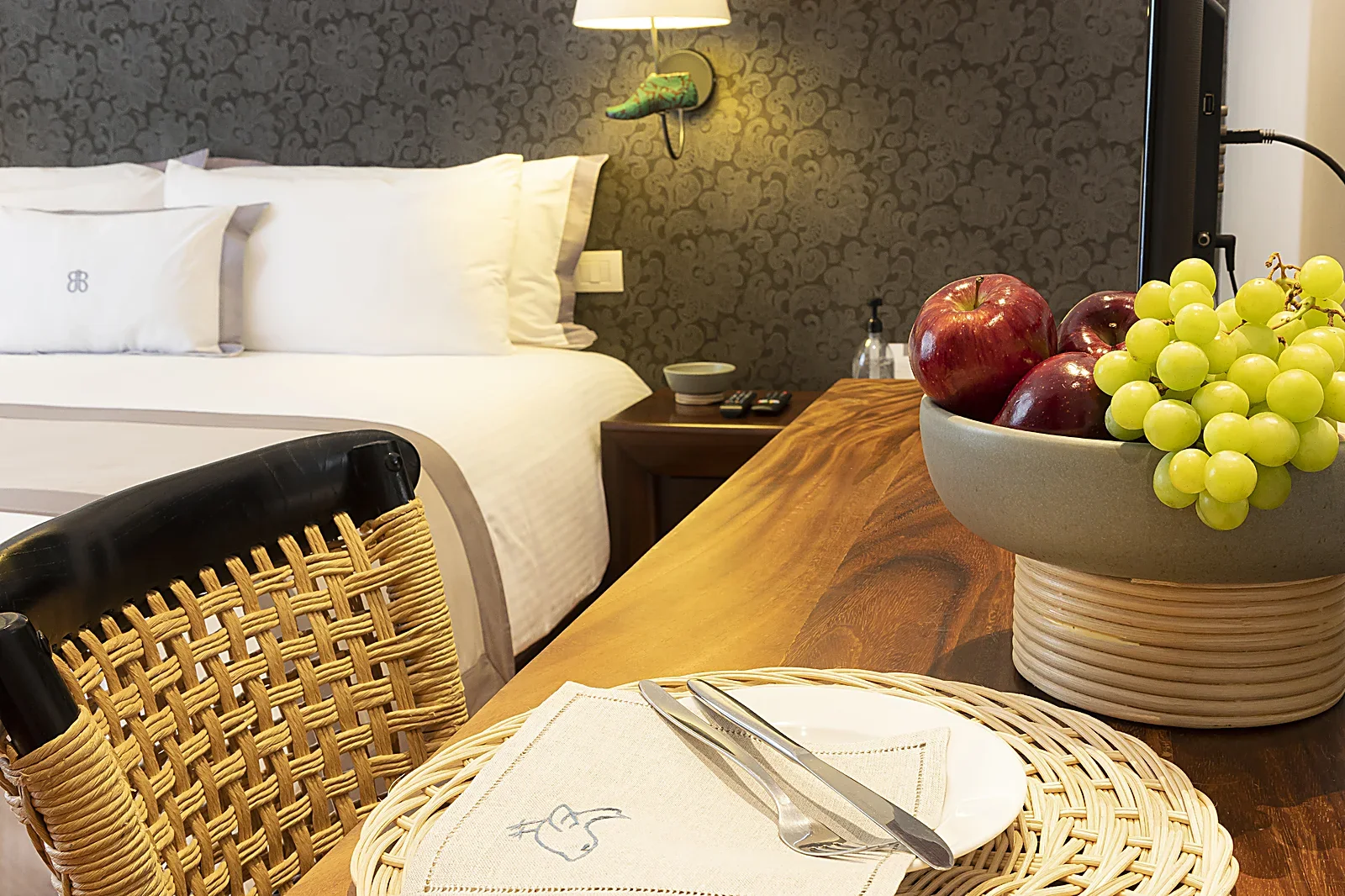
Casa Goliana is eight rooms in a restored early 20th-century mansion at Guanajuato 199, Roma Norte — walking distance from the neighbourhood’s own altars, twenty minutes from the parade route on Reforma, and with a concierge who arranges the private transport to Mixquic on the night of 2 November. Artisanal breakfast included; check-in from 15:00.
Check availability for 29 October – 3 November · See the rooms · Ask about the Mixquic transfer