Here’s the good news: Mexico City has one of the most pleasant year-round climates of any major capital. Perched at 2,240 meters (7,350 feet) of elevation, it enjoys mild “eternal spring” temperatures every single month — no brutal summer heat, no freezing winter. So the real question isn’t really weather; it’s what’s happening. Your ideal time to visit depends on whether you want to catch the city’s spectacular Day of the Dead celebrations, its world-class Art Week, the jacaranda bloom, the 2026 World Cup, or simply the quietest, cheapest stretch with the fewest crowds. This month-by-month guide pairs the city’s gentle seasons with its biggest 2026 events so you can pick the perfect time to come.
Year at a glance
Click a month to jump to that section below
Mexico City’s two seasons
The city has just two real seasons, and understanding them is the key to planning:
- Dry season (November–April): Sunny, mild days, cool nights and very little rain. This is the most reliable and popular time to visit — blue skies almost every day.
- Rainy season (May–October): Warm, bright mornings followed by short, heavy afternoon or evening showers that usually clear within an hour or two. Despite the name, it rarely rains all day — and the city is greener, fresher and less crowded.
Daytime highs hover around 21–26 °C (70–79 °F) for most of the year, with cooler evenings that can dip to single digits Celsius in winter. The practical takeaway: pack a light jacket year-round for the cool nights, and add a compact umbrella in the rainy season. You’ll rarely need more than that.
Mexico City average temperature and rainfall by month
| Month | Avg. high | Avg. low | Avg. rainfall |
|---|---|---|---|
| January | 21°C / 70°F | 3°C / 37°F | 10mm |
| February | 23°C / 74°F | 4°C / 40°F | 5mm |
| March | 26°C / 79°F | 5°C / 42°F | 6mm |
| April | 27°C / 80°F | 7°C / 44°F | 14mm |
| May | 27°C / 80°F | 7°C / 44°F | 24mm |
| June | 26°C / 78°F | 7°C / 44°F | 61mm |
| July | 24°C / 75°F | 7°C / 44°F | 70mm |
| August | 24°C / 75°F | 6°C / 43°F | 55mm |
| September | 24°C / 74°F | 6°C / 43°F | 38mm |
| October | 24°C / 75°F | 5°C / 42°F | 18mm |
| November | 22°C / 72°F | 4°C / 38°F | 1mm |
| December | 21°C / 69°F | 3°C / 37°F | 2mm |
Source: 1981–2010 climate averages, Current Results. The pattern is clear: November through April is both the driest and the most temperature-stable stretch, which is why it’s the season most travel guides — including this one — recommend first.
Month-by-month: weather + what’s on
January–February — peak dry season & Art Week
Crisp, sunny and ideal for walking, with cool mornings and warm afternoons. February is one of the year’s cultural high points: the city’s Art Week, anchored by the Zona Maco fair, fills Roma Norte’s galleries with their strongest shows and draws the global art world. Plan with our Art Week guide and our Roma Norte galleries guide. February also brings charming, distinct Valentine’s traditions — see how Mexico celebrates Valentine’s Day.
March–April — jacaranda season
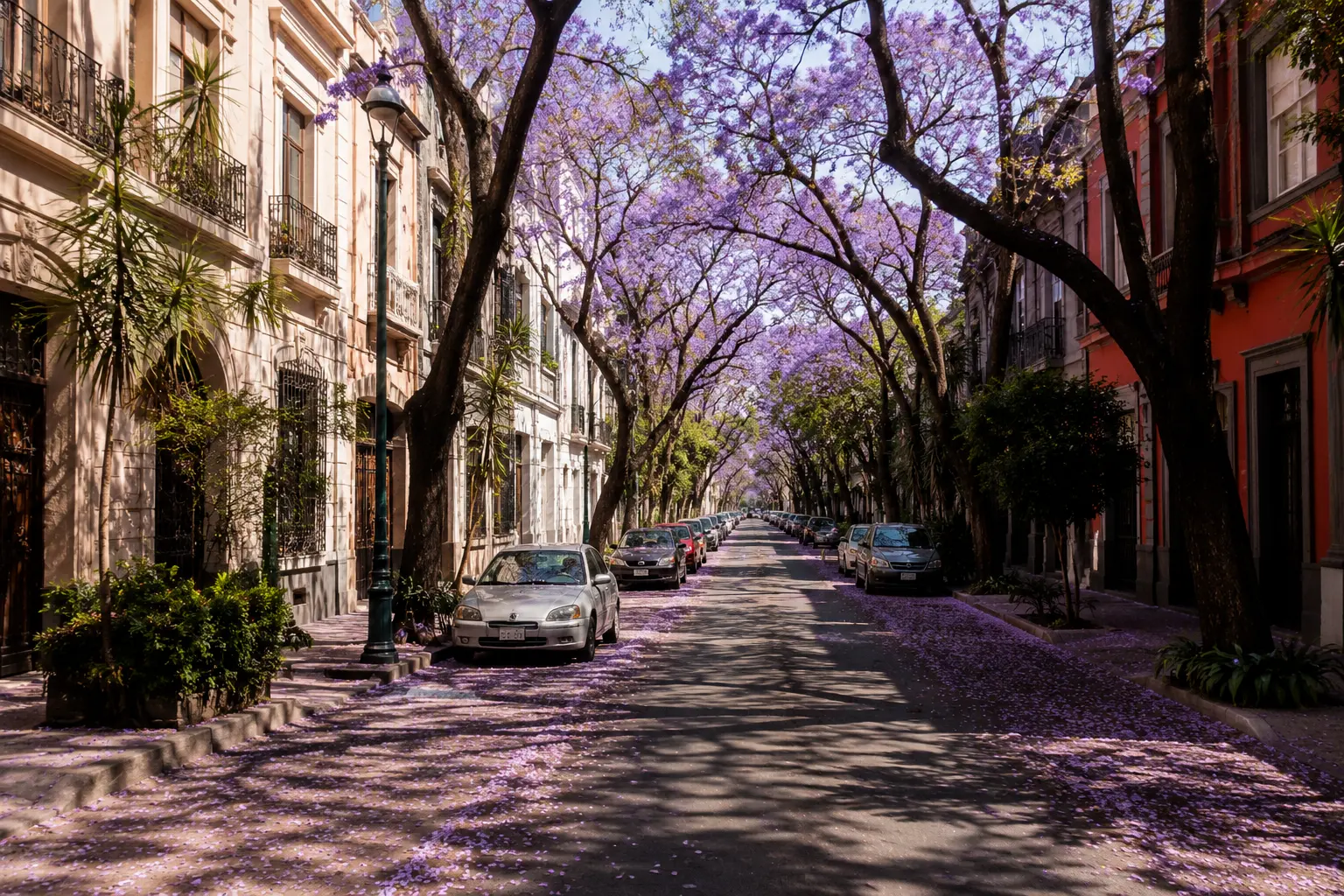
Arguably the most beautiful time of year. The city’s jacaranda trees burst into clouds of purple bloom — Roma Norte’s streets are spectacular — while the weather stays warm, dry and lively. April warms up toward the end of the dry season. Holy Week (Semana Santa) brings a domestic travel surge; the city itself can feel a touch quieter as locals leave, which is pleasant for visitors.
May–June — early rains & the 2026 World Cup
May brings one of Mexico’s most celebrated dates: Mother’s Day on May 10 — the city fills with flowers, family gatherings and a warmly festive energy that first-time visitors find unexpectedly charming. June marks the start of Pride Month, culminating in one of Latin America’s largest Pride marches along Paseo de la Reforma, with the surrounding week packed with parties, exhibitions and performances across Roma Norte. The afternoon rains arrive too — short, warm showers that clear quickly and leave the city feeling fresher and greener.
July–August — green season
The heart of the rainy season: mornings are bright and warm, afternoons bring reliable (but usually brief) downpours, and the city turns lush and atmospheric. Crucially, these are among the quietest, best-value months for tourism, with thinner crowds and easier bookings. Great for travelers who like a slower pace — exactly the spirit of our slow-travel guide. Just plan indoor activities or a long lunch around the afternoon rain.
September — Independence month
Patriotic energy peaks around September 15–16, when the city celebrates Mexican Independence with El Grito, fireworks and parties — the Zócalo is the epicenter, but the whole city joins in. The late-season rains begin to taper. It’s a festive, memorable, very local time to visit, with fewer foreign tourists than the autumn peak.
October–early November — Day of the Dead (the big one)
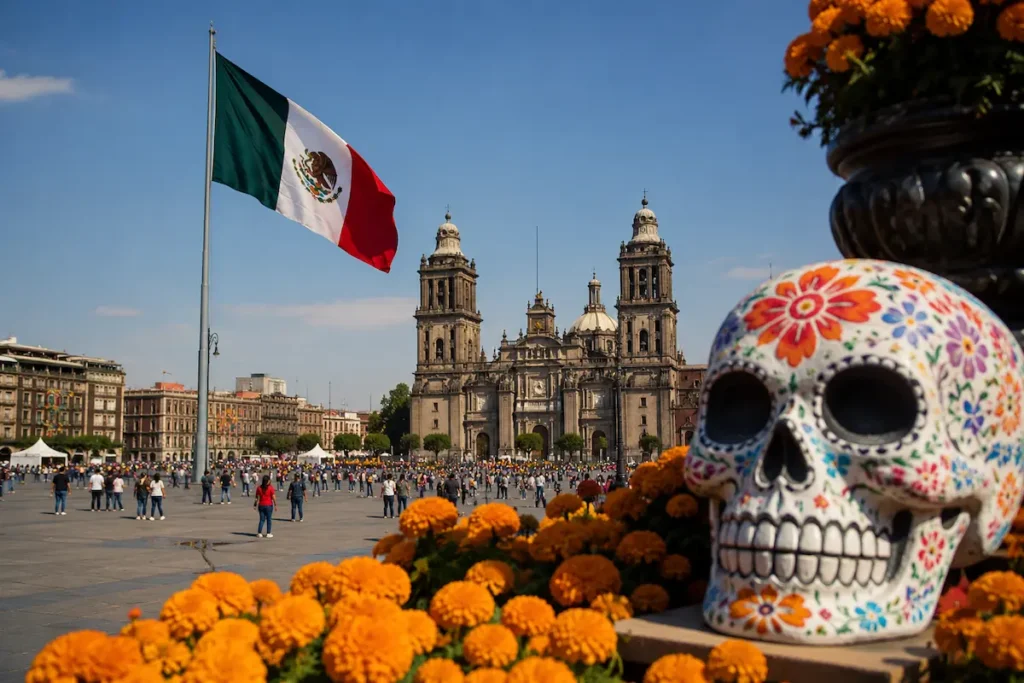
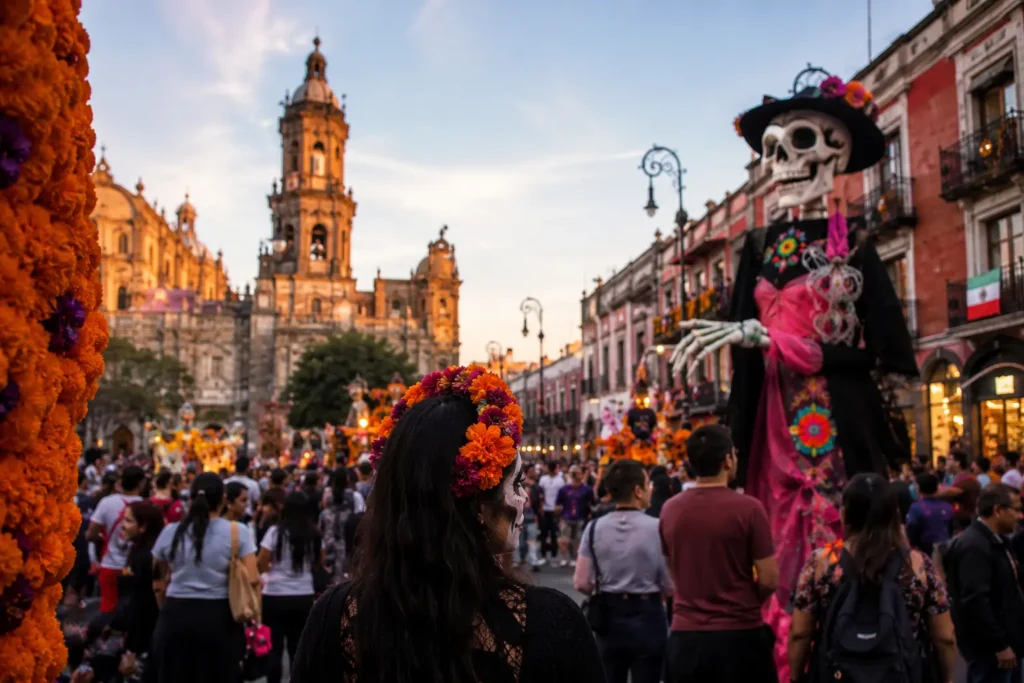
The city’s most spectacular season. Día de Muertos brings ofrendas (altars), marigold-draped streets, face paint, and the famous Day of the Dead parade — a globally recognized celebration that draws visitors from around the world. The weather is dry, mild and perfect. October also brings the Formula 1 Mexican Grand Prix, held at the Autódromo Hermanos Rodríguez in the third week of the month — one of the most celebrated race weekends on the F1 calendar, with the city buzzing well beyond the track. Both events make this the busiest and most electric period of the year in Mexico City — book accommodation well in advance.
November — the sweet spot
Once the Day of the Dead crowds thin out, November settles into beautiful dry-season weather with sunny days, comfortable temperatures and slightly easier bookings. Many locals consider it one of the best all-round months to be in the city.
December — holidays & posadas
Cool, clear and festive. December brings Las Posadas, Christmas markets, the December 12 celebration of the Virgin of Guadalupe, holiday lights across the city, and a lively New Year’s Eve. It’s magical, though evenings get genuinely chilly — bring a warmer layer. See our full Mexico City in December guide.
When should YOU go? A quick decision guide
- Best weather overall: November–April (dry season), with blue skies almost guaranteed.
- Best for culture: February (Art Week) or late October (Day of the Dead).
- Most beautiful: March–April, for the jacaranda bloom.
- Fewest crowds & best value: July–August (green season).
- Most festive local energy: September (Independence) or December (holidays).
What to pack, whatever the season
- Layers. Warm afternoons, cool evenings — a light jacket or sweater is essential year-round.
- Comfortable walking shoes. The best of Mexico City is explored on foot, especially in Roma Norte.
- A compact umbrella in the rainy season (May–October) for the afternoon showers.
- Sun protection. The high altitude means strong UV even on mild days.
Whenever you come, base yourself well
Mexico City rewards travelers who stay central and walkable in every season. Casa Goliana in Roma Norte puts you steps from the city’s best food, galleries and events year-round, with personal advice on what’s on during your dates — see our rooms. Not sure where to base? Read our guides to the safest neighborhoods and where to stay in Roma Norte. Planning to get out of town? See the best day trips from Mexico City.
Frequently asked questions
What is the best month to visit Mexico City?
Mexico City has a mild, spring-like climate year-round at 2,240 meters of elevation, so the best time to visit depends on events rather than weather. For reliable weather, any month from November to April works well. For events, February (Art Week) and late October (Day of the Dead) are the highlights, while March–April brings the jacaranda bloom.
Does Mexico City have four seasons?
Not in the traditional sense. Temperatures stay mild nearly every month thanks to the city’s high altitude, without extreme summer heat or freezing winters — the real distinction is dry season (Nov–Apr) versus rainy season (May–Oct).
What is the rainy season in Mexico City?
Roughly May through October, when warm, bright days bring short, heavy afternoon or evening showers that usually clear within an hour or two. It rarely rains all day.
Is Mexico City cold?
Rarely. Days are mild year-round (21–26°C / 70–79°F), but evenings can be cool, especially December–February when nights can drop to single digits Celsius — bring a light jacket.
When is the cheapest time to visit Mexico City?
The rainy season, especially July and August, tends to have the thinnest crowds and best value, since it’s outside the major event peaks. Just plan around the afternoon showers.
When is Day of the Dead in Mexico City in 2026?
The core celebrations fall around the end of October and the first days of November. It’s the busiest tourist period of the year — book accommodation well in advance.
Pick your season and stay in the heart of it. Book Casa Goliana in Roma Norte.