Written by the Casa Goliana team, who keep a house in the centre of Mérida. Last updated 11 August 2026.
The short answer
Give Mérida three days for the city — Plaza Grande, Paseo de Montejo, the Gran Museo del Mundo Maya and a great deal of cochinita pibil — and five to seven if you want the cenotes, Uxmal, Izamal and the flamingos at Celestún. Go between November and March, when the heat is generous rather than punishing. It is one of the safest cities in Mexico, one of the best-value, and the food is unlike anywhere else in the country.
Why Mérida
Mérida is the capital of Yucatán, founded by the Spanish in 1542 on top of the Maya city of T’hó, whose stones were quarried to build the cathedral that still stands on the main square. That layering is the whole character of the place: a colonial grid over a Maya city, in a state where Maya is still spoken daily and where the food, the language and the sense of humour are recognisably their own thing.
They call it La Ciudad Blanca, the White City — for the pale limestone, for the whitewashed facades, or, as Yucatecos will tell you, because it is clean. It is also, consistently, one of the safest cities in Mexico, one of the most affordable, and one of the easiest to be in: flat, walkable in the centre, and organised around a numbered street grid that takes about ten minutes to understand.
For visitors arriving from Mexico City, the contrast is the point. Where the capital is dense, high and cool, Mérida is low, wide and hot, and it moves at half the speed. It is a two-hour flight and a completely different country.
The city: what to see
Plaza Grande
The main square, formally the Plaza de la Independencia, and still the centre of everything. On its four sides:
- Catedral de San Ildefonso, built between 1561 and 1598 and one of the oldest cathedrals on the American mainland — austere, fortress-like, and built from the stones of the Maya city it replaced.
- Casa de Montejo, whose extraordinary 16th-century plateresque facade shows Spanish conquistadors standing on the heads of Maya. It is a museum today, and free to enter.
- Palacio de Gobierno, whose upper galleries hold Fernando Castro Pacheco’s murals on the history of Yucatán — among the best public art in southern Mexico, and also free.
- Palacio Municipal, the city hall, with its clock tower and arcade.
Sit in the square in the evening on one of the S-shaped confidentes chairs, which are designed so two people face each other. Everyone in Mérida does.
Paseo de Montejo
Mérida’s grand avenue, laid out at the end of the nineteenth century in deliberate imitation of the Parisian boulevards, and lined with the mansions built by the families who grew rich on henequén — the sisal agave whose fibre made rope for the world’s shipping, and whose plantations ran on brutal labour conditions. The boom lasted a few decades and left this street behind.
Walk it in the early evening. Stop at the Palacio Cantón, an ornate mansion that now houses the Museo Regional de Antropología, and at Casa Museo Montes Molina, which preserves a henequén-era house with its furniture intact. At the north end stands the Monumento a la Patria, a vast carved stone monument by Rómulo Rozo telling Mexican history in relief.
Gran Museo del Mundo Maya
North of the centre, and the best single introduction to Maya civilisation in the peninsula — thousands of pieces, well presented, in a striking modern building. Go here before you go to Uxmal or Chichén Itzá, not after. It changes what you see.
Mercado Lucas de Gálvez
Mérida’s central market: produce, habaneros, recado pastes, hammocks, embroidered huipiles and Panama hats woven in the caves of Becal. Loud, hot and entirely genuine. Eat breakfast at one of the comedores upstairs. Same rules as any big Mexican market — go in the morning, keep your bag in front. We keep a full guide to market-shopping in Mexico that applies here too.
The neighbourhood parks
Mérida organises itself around small squares, each with a church and its own character: Parque de Santa Lucía for the Thursday serenade, Parque de Santa Ana for the evening food stalls, Parque de la Mejorada for quiet. Walking between them at dusk is the single nicest thing to do in the city.
The free evenings: Mérida’s weekly calendar
Mérida runs one of the most generous municipal culture programmes in Mexico, and almost all of it is free. The schedule has been broadly stable for years, but confirm locally — it does shift.
| When | What | Where |
|---|---|---|
| Monday evening | Vaquería Yucateca — jarana dancing in traditional dress, the region’s signature folk performance | Palacio Municipal, Plaza Grande |
| Tuesday evening | Big-band and danzón night | Parque de Santiago |
| Wednesday | Concerts and theatre in the city’s cultural centres | Various |
| Thursday evening | Serenata Yucateca — trova, poetry and dance, running since 1965 | Parque de Santa Lucía |
| Friday evening | Serenade and video-mapping projection on the cathedral facade | Plaza Grande |
| Saturday night | Noche Mexicana and the Corredor Gastronómico — food stalls and music | Start of Paseo de Montejo |
| Sunday | Mérida en Domingo — the centre closes to cars for a day-long market, food and dancing; plus the morning bici-ruta along Paseo de Montejo | Plaza Grande and Paseo de Montejo |
If you have one evening, make it Thursday at Santa Lucía. If you have one full day, make it Sunday.
What to eat in Yucatán
Yucatecan food is not Mexican food with a regional accent; it is a separate cuisine, built on Maya technique, Caribbean and Lebanese influence, and a pantry that barely exists elsewhere in Mexico — achiote, sour orange, habanero, epazote, banana leaf, recado spice pastes.
| Dish | What it is |
|---|---|
| Cochinita pibil | Pork marinated in achiote and sour orange, wrapped in banana leaf and slow-roasted in a píib, an underground pit. Eaten in tacos with pickled red onion and habanero. Traditionally a Sunday-morning dish — go early, it sells out. |
| Sopa de lima | Chicken broth with shredded turkey or chicken, crisp tortilla strips, and the aromatic local lima, which is not a lime. |
| Papadzules | Tortillas rolled around chopped egg, drenched in a pumpkin-seed sauce and tomato. Pre-Hispanic and unlike anything else. |
| Panuchos and salbutes | Fried tortillas — panuchos stuffed with black bean, salbutes puffed — topped with turkey, lettuce, avocado and pickled onion. The evening street food of the parks. |
| Poc chuc | Pork marinated in sour orange and grilled, with charred onion and black beans. |
| Queso relleno | A whole hollowed Edam cheese stuffed with spiced pork and served with two sauces — the strangest and most delicious relic of Yucatán’s trading history. |
| Relleno negro | Turkey in a near-black broth of charred chiles. Powerful and beloved. |
| Marquesitas | A crisp rolled crêpe filled with Edam cheese and Nutella or cajeta. Sounds wrong; is not. Street carts, evenings, in the parks. |
| Xtabentún | An anise-and-honey liqueur made from the nectar of a local flower, drunk as a digestif. |
| Agua de chaya | Chaya — “tree spinach”, a Maya staple green — blended with pineapple and lime. Order it everywhere. |
A warning worth taking seriously: the habanero salsa on the table is not decorative. Try a drop before you spoon it.
Cenotes near Mérida
The Yucatán peninsula has no surface rivers. Rain drains straight through porous limestone into a vast underground network, and where the roof of a cave collapses you get a cenote — a sinkhole of impossibly clear fresh water, often with tree roots hanging through the opening. The Maya considered them entrances to the underworld and made offerings in them. The peninsula’s ring of cenotes traces the rim of the Chicxulub crater, left by the asteroid impact 66 million years ago.
There are thousands. Practically, from Mérida:
- Homún — about an hour southeast, a village with dozens of cenotes, many run by local families. The classic day is three or four in a morning, moving between them by moto-taxi. Cash only, small entrance fees.
- Cuzamá — adjacent to Homún, historically visited by horse-drawn rail trolley along the old henequén tracks. Three spectacular cave cenotes.
- Santa Bárbara — an organised cluster near Homún with facilities, good if you are travelling with children or want somewhere straightforward.
- Dzibilchaltún — a Maya site just north of Mérida with the open Cenote Xlacah inside the archaeological zone; you can swim where a city once drew its water.
Practical notes: bring cash, water shoes, and biodegradable sunscreen — most cenotes require you to rinse off before entering, and conventional sunscreen damages them. Life jackets are usually compulsory and usually included. Go early; by noon the tour groups arrive.
Maya sites: Uxmal, Chichén Itzá and the rest
Uxmal
About 80 km south of Mérida, and for many visitors the better of the two great sites. Uxmal is the masterpiece of the Puuc architectural style — intricate stone latticework, masks of the rain god Chaac stacked in rows, and the rounded Pyramid of the Magician, which does not look like any other Maya pyramid. It is a UNESCO World Heritage Site, it is beautifully kept, and it is far quieter than Chichén Itzá. Arrive at opening.
The Ruta Puuc
Beyond Uxmal, a road links Kabah, Sayil, Xlapak and Labná — smaller sites, often nearly empty, plus the caves of Loltún. A full and rewarding day with a driver.
Chichén Itzá
Roughly 120 km east, about two hours by road, and one of the New Seven Wonders of the World. El Castillo, the great ball court, the Temple of the Warriors and the sacred cenote are extraordinary, and so are the crowds — the site absorbs coach parties from Cancún and the Riviera Maya from mid-morning. Leave Mérida by 7 am, be at the gate for opening, and you will have an hour of something close to quiet. On the equinoxes, the shadow of a serpent descends the staircase of El Castillo; that day, expect tens of thousands of people.
Ek Balam and Mayapán
Ek Balam, further east near Valladolid, has an astonishing stucco frieze and a pyramid you may still climb. Mayapán, only 40 km from Mérida, is a compact late-Maya capital that most visitors skip entirely, which is exactly its charm.
Day trips: Izamal, Celestún, Progreso, Valladolid
| Destination | Distance | Why go |
|---|---|---|
| Izamal | ≈ 70 km east | The Yellow City — an entire colonial town painted ochre, built around a vast 16th-century Franciscan monastery that sits on a Maya pyramid platform. A Pueblo Mágico and one of the most photogenic places in Mexico. |
| Celestún | ≈ 90 km west | A biosphere reserve on the Gulf where thousands of flamingos gather; boat trips through the mangroves. Best from roughly November to March. |
| Progreso | ≈ 35 km north | Mérida’s beach — warm shallow Gulf water, seafood, and one of the longest piers in the world. A half day, and the standard local escape from the heat. |
| Valladolid | ≈ 160 km east | A beautiful colonial town with cenotes inside the town limits, en route to Chichén Itzá and Ek Balam. Worth an overnight rather than a rushed day. |
| Cuzamá / Homún | ≈ 60 km southeast | The cenote day. See above. |
| Uxmal + Ruta Puuc | ≈ 80 km south | The best archaeological day in the state. |
Mérida is small enough that all of these are genuinely day trips. Hiring a driver for the day is the comfortable option and, split between three or four people, not expensive; ADO buses cover the main routes reliably and cheaply.
When to go, and Hanal Pixán
| Season | What it is like |
|---|---|
| November – March | The best window. Dry, sunny, days in the high twenties Celsius, cool enough at night to sit outside. Peak season; book ahead for Christmas and New Year. |
| April – June | Very hot — regularly above 38 °C, sometimes far above. Plan mornings and evenings, and take a house with a pool seriously. |
| June – October | Rainy season, humid, with short intense afternoon storms. Also hurricane season on the Gulf. Fewer visitors and lower prices, and the countryside is green. |
| Late October | Hanal Pixán — see below. |
Hanal Pixán — “food of the souls” in Maya — is Yucatán’s version of Day of the Dead, and it is quite distinct from what happens in Mexico City. Altars are laid with a Maya vocabulary, and the season’s dish is mucbipollo, a large tamal of corn dough and chicken or pork baked underground in a píib and eaten only at this time of year. Mérida holds the Paseo de las Ánimas, a candlelit procession from the general cemetery to the Arco de San Juan, usually in the last days of October, with participants in white and painted faces.
If you are already planning a Día de Muertos trip, the two make a remarkable pair — the capital’s version, then the peninsula’s. See our Day of the Dead in Mexico City 2026 guide.
Practical notes
- Getting there. Mérida International Airport (MID) is about 10 km from the centre, with direct flights from Mexico City (about two hours), several US cities and other Mexican hubs. ADO’s first-class buses connect Cancún, Playa del Carmen, Campeche and Valladolid comfortably.
- Getting around. The Centro is walkable and flat. Beyond it, taxis and ride-hail are cheap. Rent a car only if you plan several independent day trips; parking in the Centro is tight.
- The heat. The single most underestimated factor. Do everything before 11 am and after 5 pm, drink far more water than you think you need, and treat a pool as infrastructure rather than luxury.
- Safety. Mérida is consistently ranked among the safest cities in Mexico. Ordinary market and night-time precautions are enough.
- Cash. Cenotes, markets, moto-taxis and village restaurants are cash-only. Carry small notes.
- Language. Spanish, with Maya widely spoken in the villages. English is common in the tourist centre and rare outside it.
- Cost. Mérida runs roughly 20 to 30 percent cheaper than Mexico City for accommodation and eating out — see our cost of living comparison.
A five-day itinerary
| Day | Plan |
|---|---|
| Day 1 | Arrive. Walk the Centro in the late afternoon: Plaza Grande, the cathedral, Casa de Montejo, the Palacio de Gobierno murals. Dinner in Santa Lucía. Adjust to the heat. |
| Day 2 | Mercado Lucas de Gálvez at 8 am for breakfast and cochinita. Gran Museo del Mundo Maya before lunch. Rest through the afternoon. Paseo de Montejo at dusk. |
| Day 3 | Uxmal and the Ruta Puuc with a driver, leaving at 7 am. Back by mid-afternoon. Easy evening. |
| Day 4 | Cenotes at Homún in the morning, three or four of them. Afternoon in the pool. Marquesitas in the park after dark. |
| Day 5 | Izamal for the yellow streets and the monastery, or Celestún for the flamingos in season. If it is Sunday, stay in the city instead for Mérida en Domingo. |
With seven days, add Chichén Itzá with an overnight in Valladolid, and a half day at Progreso.
Where to stay
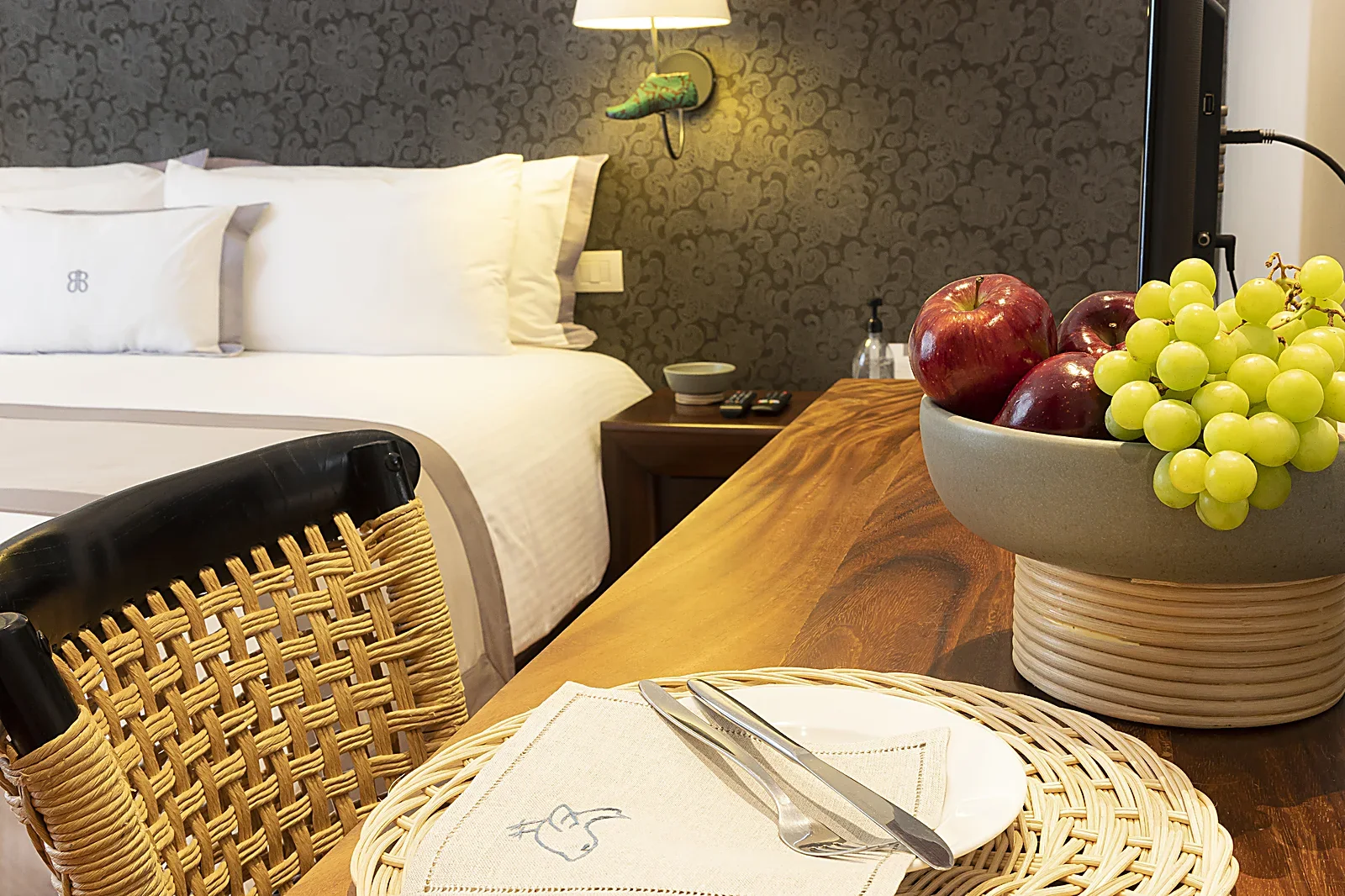
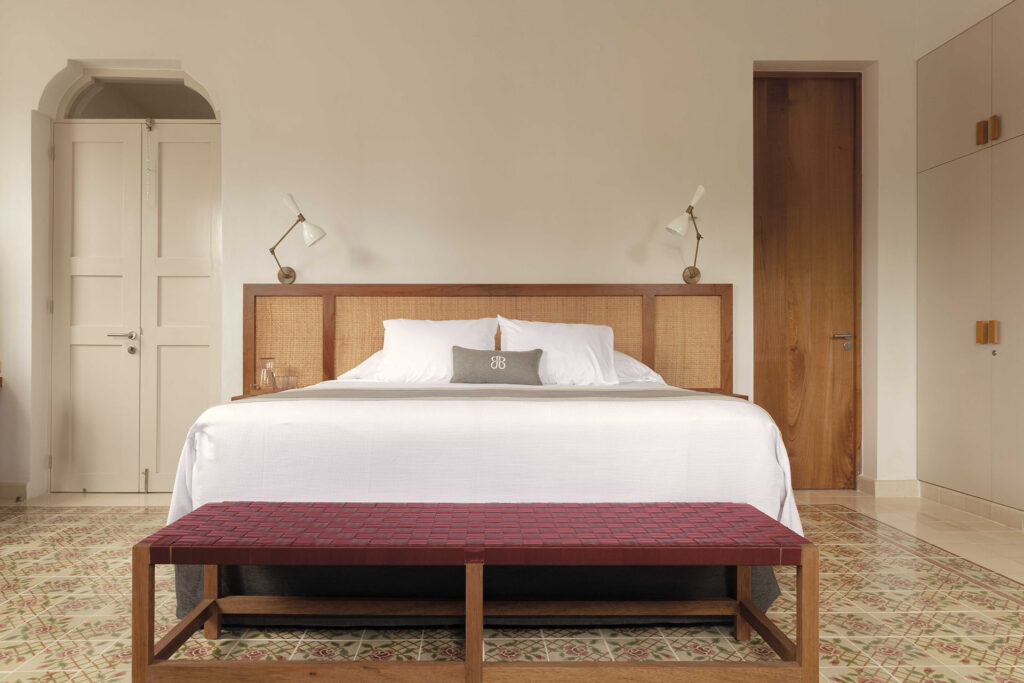
Casa Goliana Mérida is our house in the Centro: three bedrooms, all air conditioned, a modern kitchen, a terrace and a private pool — and it is rented as an entire house, to one group at a time. It carries the same signature as our Mexico City property, furnished with Mexican craft and design, and it sits minutes from the historic centre, with cenotes, ruins and the Gulf beaches all within a day’s reach.
It suits the trips Mérida is best for: a family, two or three couples, or a group who want a base with a kitchen and somewhere to swim at three in the afternoon when the heat makes any other plan a bad idea.
See the house and book · +52 55 1201 5007 · Ver en español
Planning both cities in one trip? Our boutique hotel in Roma Norte, Mexico City has eight rooms in a restored early 20th-century mansion, and it is a two-hour flight away. Many guests do the capital first and the peninsula second — tell us and we will coordinate both.
Frequently asked questions
How many days do you need in Mérida?
Three days covers the city itself — Plaza Grande, Paseo de Montejo, the museums and the food. Five to seven lets you add cenotes, Uxmal and the Ruta Puuc, Izamal, Celestún and a beach afternoon at Progreso without rushing. Many visitors use Mérida as a base for the whole Yucatán peninsula and stay a week or more.
Is Mérida safe?
Mérida is consistently cited among the safest cities in Mexico, and Yucatán among the safest states. Walking the Centro and Paseo de Montejo in the evening is normal and comfortable. Standard precautions apply — watch belongings in the markets, use registered taxis or ride-hail at night — but the atmosphere is markedly calmer than in most large Mexican cities.
What is the best time to visit Mérida?
November to March is the sweet spot: dry, sunny and warm rather than punishing, with daytime temperatures usually in the high twenties Celsius. April to June is very hot, regularly above 38 °C. June to October is the rainy and hurricane season, with humid afternoons and short intense storms. Late October brings Hanal Pixán, the Yucatecan Day of the Dead, which is worth planning around.
Can you visit Chichén Itzá from Mérida?
Yes. Chichén Itzá is roughly 120 km east of Mérida, about two hours by road, and is an easy day trip. Leave by 7 am to arrive at opening and beat both the tour buses from the Riviera Maya and the midday heat. Uxmal, 80 km south, is closer, quieter and — for many visitors — the more moving of the two sites.
What food is Mérida known for?
Yucatecan cuisine is distinct from the rest of Mexico, built on achiote, sour orange, habanero and Maya technique. The essentials are cochinita pibil, slow-roasted pork marinated in achiote and traditionally cooked in an underground pit; sopa de lima; papadzules; panuchos and salbutes; poc chuc; queso relleno; and marquesitas, the crisp rolled street-food dessert.
Are there cenotes near Mérida?
Hundreds. The largest concentrations easy to reach are around Homún and Cuzamá, roughly an hour southeast, where you can visit several cave and open cenotes in a day, and Santa Bárbara near Homún. Cenotes exist because the Yucatán peninsula is porous limestone with no surface rivers — the same geology traced by the ring of the Chicxulub impact crater.
Is Mérida a good place to live?
It is one of the most popular destinations in Mexico for foreign residents and retirees, on the strength of safety, cost, healthcare and a genuinely beautiful colonial centre. The honest counterweight is the heat from April to June, which is severe, and a smaller cultural and professional scene than Mexico City. See our ranking of the best cities for expats in Mexico.
Mérida or Mexico City?
Different trips. Mexico City offers depth — museums, restaurants at world level, galleries, neighbourhoods you could spend a month in, and better international flight connections. Mérida offers calm, colonial beauty, a distinct cuisine, and easy access to cenotes, Maya cities and the Gulf. If you have ten days, do both: they are two hours apart by air and they complement each other perfectly.