Updated: May 2026 · Compiled by the Casa Goliana team, on the ground in Mexico City.
The best cities for expats in Mexico are Mexico City (CDMX), San Miguel de Allende, Mérida, Playa del Carmen, Puerto Vallarta, Oaxaca, Guadalajara, and Lake Chapala. Each offers distinct advantages: CDMX for career and culture, San Miguel for community, Mérida for safety, Playa for coastal living, Guadalajara for tech, Oaxaca for slower pace and food, Vallarta for beach-plus-amenities, and Chapala for retirees on a lower budget.
This 2026 guide compares all eight with real data — cost of living, expat community size, safety, climate, internet — so you can choose the right base for your life in Mexico.
Quick Comparison: Best Cities for Expats in Mexico (2026)
| City | Monthly Cost (Single) | Rent 1BR Center | Expat Population | Safety | Climate |
|---|---|---|---|---|---|
| Mexico City | $1,400–2,200 USD | $700–1,400 | ~700,000 | Good (Roma/Condesa/Polanco) | Spring all year |
| San Miguel de Allende | $1,800–2,800 | $900–1,800 | ~15,000 (largest US expat % in MX) | Excellent | Mild, dry |
| Mérida | $1,200–1,800 | $500–900 | ~10,000 | Among safest in Mexico | Hot, humid |
| Playa del Carmen | $1,500–2,500 | $800–1,500 | ~30,000 | Tourist-zone safe | Caribbean, hot |
| Puerto Vallarta | $1,400–2,300 | $700–1,400 | ~30,000 | Tourist-zone safe | Tropical |
| Oaxaca | $1,000–1,700 | $450–800 | ~5,000 | Very safe | Mild |
| Guadalajara | $1,300–2,000 | $600–1,100 | ~30,000 | Good (Providencia, Chapalita) | Spring all year |
| Lake Chapala | $1,000–1,500 | $400–800 | ~15,000 (mostly retirees) | Excellent | Mild, best in Mexico |
What Expats Actually Look For When Choosing a City in Mexico
Talking to hundreds of guests at Casa Goliana over the years, the same handful of variables comes up in almost every decision:
- Cost vs lifestyle ceiling. Cheaper cities trade off cultural depth, restaurant scenes, and international flights.
- Climate. Mexico’s altitude makes a difference. CDMX, Guadalajara and San Miguel are mild year-round at 1,500–2,200m. Coastal cities (Playa, Vallarta, Mérida) are hot.
- Existing expat community. Larger expat populations mean more English-speaking services and faster social integration, at the cost of authenticity.
- Spanish requirement. Mérida, Oaxaca and CDMX outside expat enclaves require functional Spanish. San Miguel and Chapala you can survive without it.
- Healthcare access. CDMX and Guadalajara have the best private hospitals; smaller cities require travel for specialized care.
- Internet for remote work. Fiber is available in CDMX, Guadalajara, Mérida and most of Quintana Roo. Coverage in San Miguel and Oaxaca varies by neighborhood.
- Visa pathway. Temporary and Permanent Resident visas have income/savings thresholds that update annually — confirm with the nearest Mexican consulate before moving.
The 8 Best Cities for Expats in Mexico (2026)
1. Mexico City (CDMX) — Best Overall for Working Expats
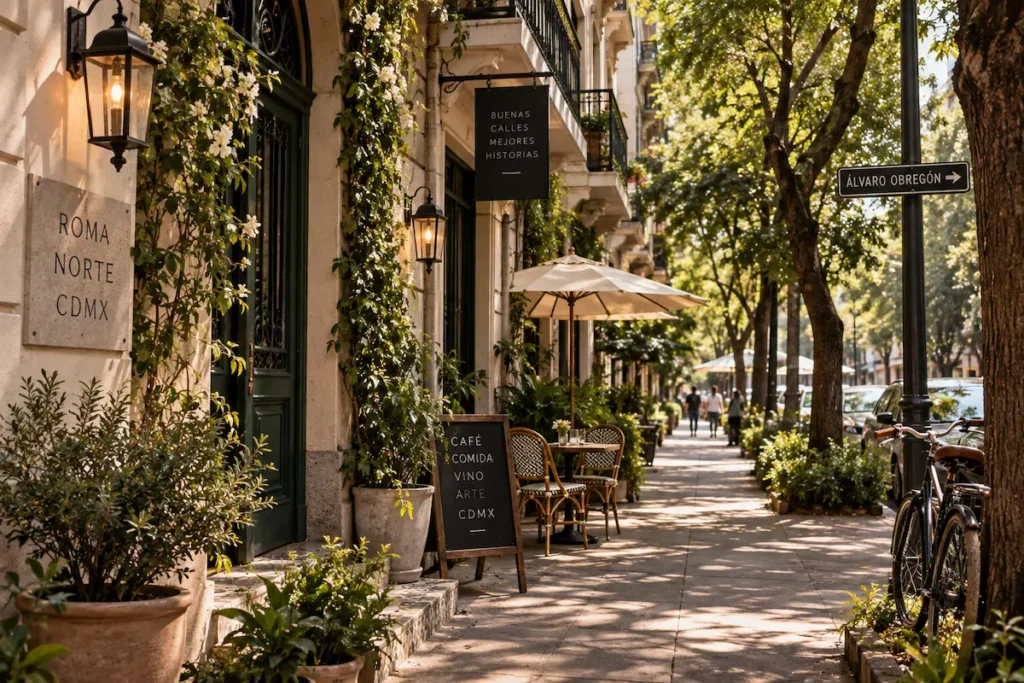
Mexico City has the largest expat population in the country — roughly 700,000 foreign residents across the metro area — and the deepest infrastructure: international hospitals, three international schools per major neighborhood, the busiest airport in Latin America, and an extensive metro and Metrobús network. The most-recommended neighborhoods for expats are Roma Norte, Condesa, Polanco, Juárez (Zona Rosa) and Coyoacán — each offering a distinct lifestyle and cost level.
Roma Norte and Condesa anchor the design, restaurant and digital-nomad scene; Polanco is the corporate-and-luxury base; Coyoacán keeps the older bohemian character. The climate sits between 61°F and 77°F nearly year-round at 2,240m altitude, which is the single biggest physical adjustment for new arrivals.
Best for: Career expats, digital nomads, culture-seekers, anyone who wants city life with the lowest sacrifice. Trade-off: traffic, density, air-quality days in winter. See our Mexico City expat neighborhoods guide and digital nomad guide 2026.
2. San Miguel de Allende — Best for US/Canadian Retirees and Artists
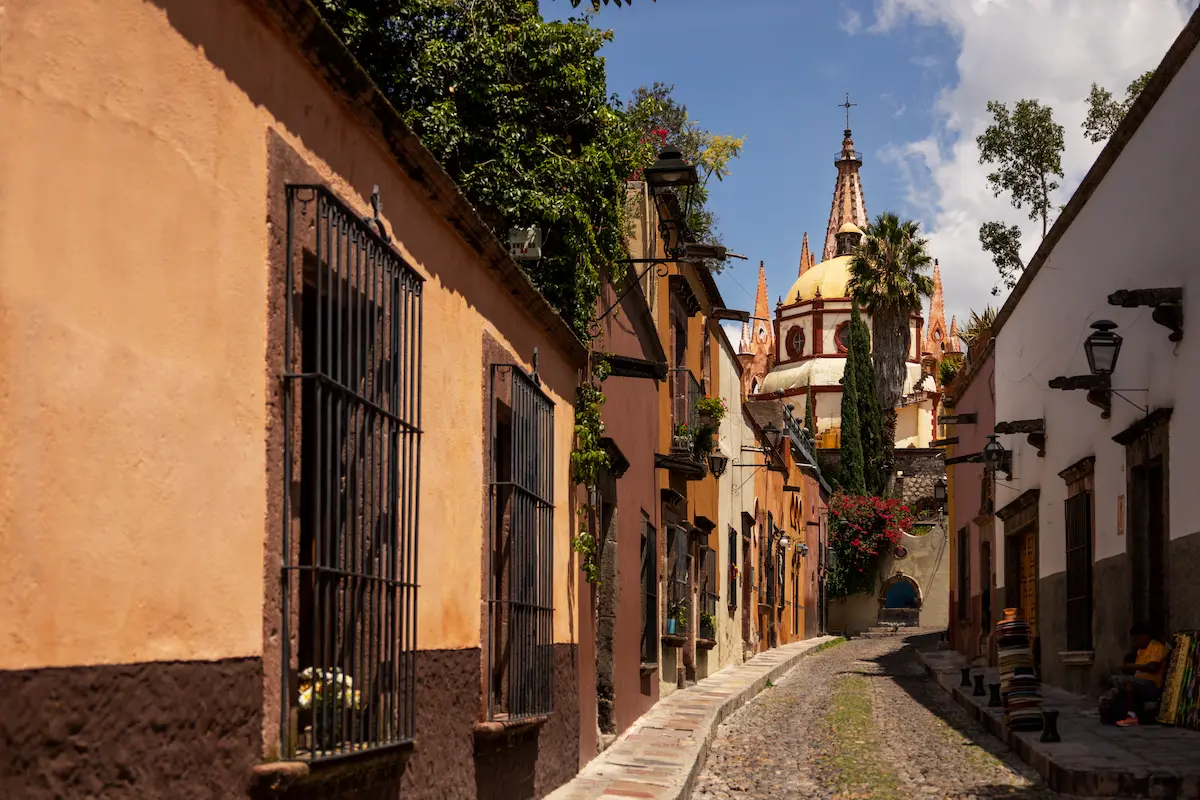
San Miguel has the highest concentration of US and Canadian expats per capita in Mexico — roughly 10–12% of the population. It has consistently ranked among Travel + Leisure’s best small cities in the world. The historic center is a UNESCO World Heritage Site and the local economy is overwhelmingly built around expat residents, second-home buyers, and tourism.
The community is the draw: more English-language services, classes, social clubs and gallery openings per square block than anywhere else in Mexico. The trade-off is that cost of living is closer to mid-tier US cities than Mexican averages, and authentic Mexican daily life is harder to find than in CDMX or Oaxaca.
Best for: Retirees, artists, social expats, those who want community without learning much Spanish.
3. Mérida — Safest and Fastest-Growing
Mérida is the capital of Yucatán and consistently rated among the safest cities in Mexico — homicide rates comparable to small-town US. The expat community has roughly doubled in size since 2018 as remote workers discover the colonial architecture, low cost of living, and proximity to Mayan ruins and Gulf beaches.
The trade-off is climate: April through September is genuinely hot and humid (86°F+ with high humidity) and air conditioning is non-negotiable. Outside expat enclaves Spanish is essential.
Best for: Remote workers, families, anyone prioritizing safety over climate.
4. Playa del Carmen — Best Caribbean Base
Playa del Carmen offers Caribbean Sea living with the international infrastructure of a tourist hub: direct flights to most US cities via Cancún (1 hour away), high-end medical, English widely spoken, and a deep restaurant scene. Roughly 30,000 foreign residents live in greater Playa, with French, Italian, German and Argentinian communities alongside the Americans.
Trade-off: heat, humidity, hurricane season (June–November), tourism saturation in high season.
Best for: Beach lifestyle, swim/dive enthusiasts, families wanting English-speaking services.
5. Puerto Vallarta — Best LGBTQ+-Friendly Beach
Vallarta is the most established Pacific-coast expat city and one of the world’s most LGBTQ+-friendly destinations — particularly Zona Romántica. Direct flights to most US west-coast hubs. Lower cost than Playa del Carmen with comparable amenities.
Best for: LGBTQ+ retirees, Pacific-coast preference, lower-cost beach living.
6. Oaxaca — Best for Food and Slow Living
Oaxaca is the gastronomic capital of Mexico — three of the country’s top ten restaurants, the most vibrant indigenous textile and crafts scene, and a UNESCO-listed historic center. The expat community is smaller and skews creative — chefs, designers, photographers. Cost of living is among the lowest of any major city on this list.
Trade-off: smaller international airport, fewer English services, less developed healthcare. Spanish is essential.
Best for: Creatives, food-driven expats, those wanting slower pace and lower cost.
7. Guadalajara — Best for Tech Expats
Guadalajara is Mexico’s “Silicon Valley” — the country’s largest tech employer concentration, Oracle, IBM, Intel, HP, and dozens of startups. Climate is mild year-round at 1,560m elevation. Cost of living is roughly 25% below CDMX. Tlaquepaque and Tonalá give it the most accessible artisan markets in central Mexico.
Best for: Tech professionals, those who want CDMX-style culture at a lower cost.
8. Lake Chapala (Ajijic and Chapala) — Best Budget Retirement
Ajijic and Chapala on the northern shore of Lake Chapala have one of the largest US/Canadian retiree populations in Mexico (~15,000+, mostly retirees). National Geographic has repeatedly cited the area as having one of the world’s best year-round climates. Cost of living is among the lowest on this list.
Trade-off: the community is heavily retirement-focused; younger expats often find it socially limited.
Best for: Retirees on a budget, climate-driven moves, those who want a tight-knit English-speaking community.
Safest Cities in Mexico for Expats
Based on official SESNSP homicide data and consistent expat reporting, the safest cities for expats in Mexico in 2026 are:
- Mérida — consistently the safest large city in Mexico
- San Miguel de Allende — very low crime
- Lake Chapala (Ajijic) — small-town safety
- Oaxaca — low rates, particularly in the historic center
- Mexico City — neighborhood-dependent; Roma Norte, Condesa, Polanco, Coyoacán are statistically safe
See our safest neighborhoods in Mexico City guide for the within-CDMX picture.
How to Choose the Best City for Your Lifestyle
If you’re working remotely: CDMX, Mérida or Guadalajara — fiber internet, infrastructure, international flights.
If you’re retiring: San Miguel, Lake Chapala or Mérida — established communities, easy English services.
If beach is the priority: Playa del Carmen (Caribbean) or Puerto Vallarta (Pacific).
If cost is the priority: Oaxaca, Mérida or Lake Chapala — comfortable life on $1,000–1,500/month.
If career/social density is the priority: Mexico City — non-comparable depth of opportunities, culture, and international community.
Frequently Asked Questions
Where do most American expats live in Mexico?
The largest US expat communities are in Mexico City, San Miguel de Allende, Lake Chapala (Ajijic), Mérida, Playa del Carmen and Puerto Vallarta. San Miguel has the highest concentration as a percentage of the local population.
What is the cheapest city to live in Mexico as an expat?
Among the cities on this list, Oaxaca and Lake Chapala are typically the least expensive — a comfortable life is achievable on $1,000–1,500 USD per month for a single person.
Which Mexican city has the best climate?
Lake Chapala’s climate has been repeatedly cited (including by National Geographic) as one of the best year-round climates in the world. Mexico City, San Miguel and Guadalajara are spring-like year-round at altitude.
Is Mexico City safe for expats?
Yes, when neighborhood-selected. Roma Norte, Condesa, Polanco, Juárez, Coyoacán and Del Valle are statistically safe and where most expats live. Standard urban precautions apply.
Do I need to speak Spanish to live in Mexico?
In San Miguel de Allende, Lake Chapala, and the expat-zone parts of Playa del Carmen and Puerto Vallarta, you can survive with English. In Mérida, Oaxaca, Guadalajara, and most of Mexico City outside Roma/Condesa/Polanco, functional Spanish is essential.
What income do I need for a Mexico temporary resident visa?
The income and savings thresholds for the Temporary Resident visa are set annually by the SRE and have been around $4,000 USD/month income or $80,000 USD in savings in recent years. Confirm current requirements with your nearest Mexican consulate — figures change yearly.
Coming to Mexico City First? Stay in Roma Norte
If Mexico City is on your shortlist, Roma Norte is the neighborhood most expats start in — and most never leave. Casa Goliana is an eight-suite boutique hotel in a restored 1920s mansion that hosts dozens of expats-in-transition each year. See our suites or read about slow travel in Roma Norte.
Frequently Asked Questions
What are the best cities for expats in Mexico?
The top cities for expats in Mexico are Mexico City, San Miguel de Allende, Mérida, Playa del Carmen, Puerto Vallarta, Oaxaca, Guadalajara and Lake Chapala, each with distinct advantages.
Which Mexican city is best for career-focused expats?
Mexico City (CDMX) leads for career opportunities and culture, given its size and economic importance.
Which Mexican city is safest for expats?
Mérida is frequently cited as one of the safest options among Mexico’s top expat cities.