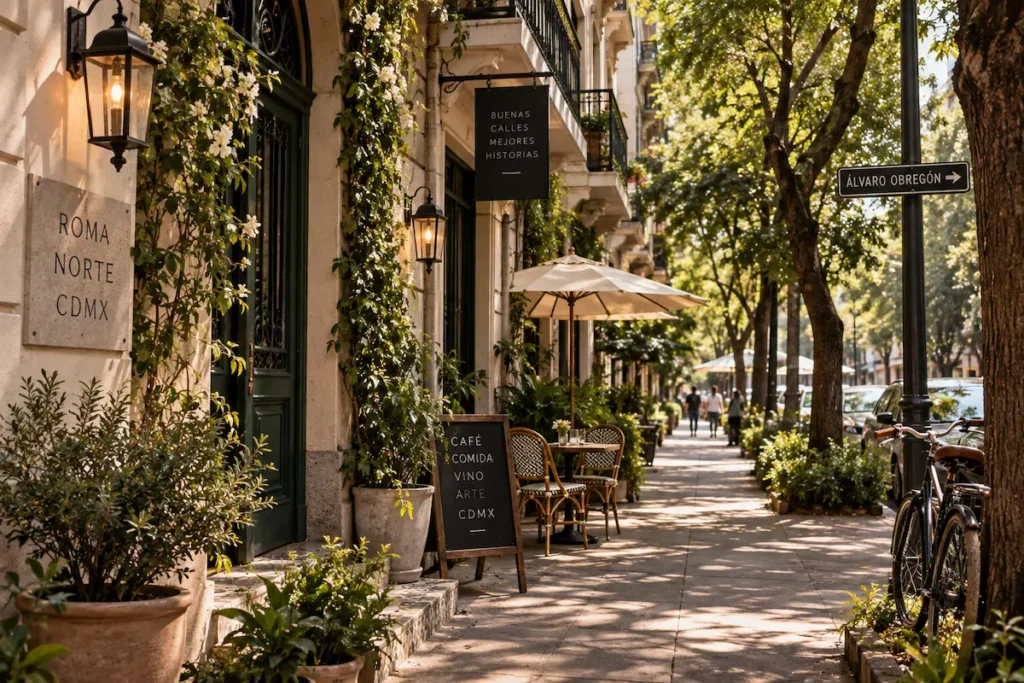
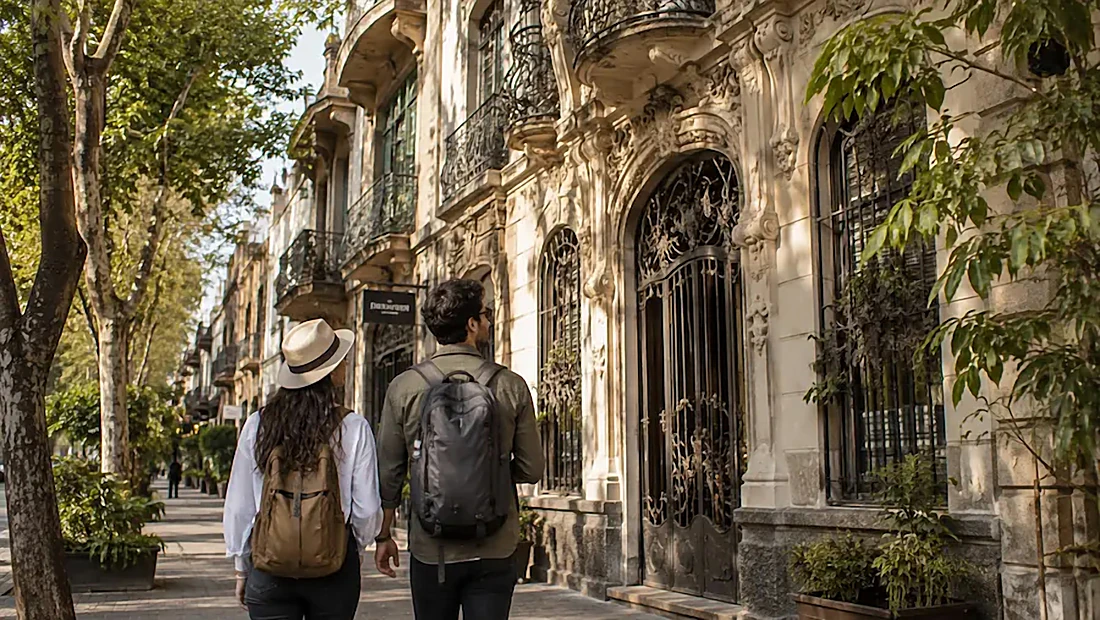
Roma Norte was designed in the early 20th century as the first elite colonia of modern Mexico City. What survives is a dense architectural treasure of Art Nouveau, Art Deco, French Eclecticism, and Neo-Colonial that most visitors miss entirely. This is a walkable 2.5-hour route departing from Casa Goliana, with 12 stops and real historical context.
Context: Why Roma Norte Looks This Way
The colonia was laid out in 1903 by English immigrant Edward Walter Orrin as part of the Porfiriato urban modernization project. Mexico’s elite at the time traveled to Europe and brought home French and Italian aesthetics. The 1985 earthquake destroyed part of the heritage, but the survivors are now protected by INBA (the National Institute of Fine Arts). The heritage zone declaration came in 2017.
The Route (12 Stops, 2.5 Hours)
Stop 1: Casa Goliana, Guanajuato 199
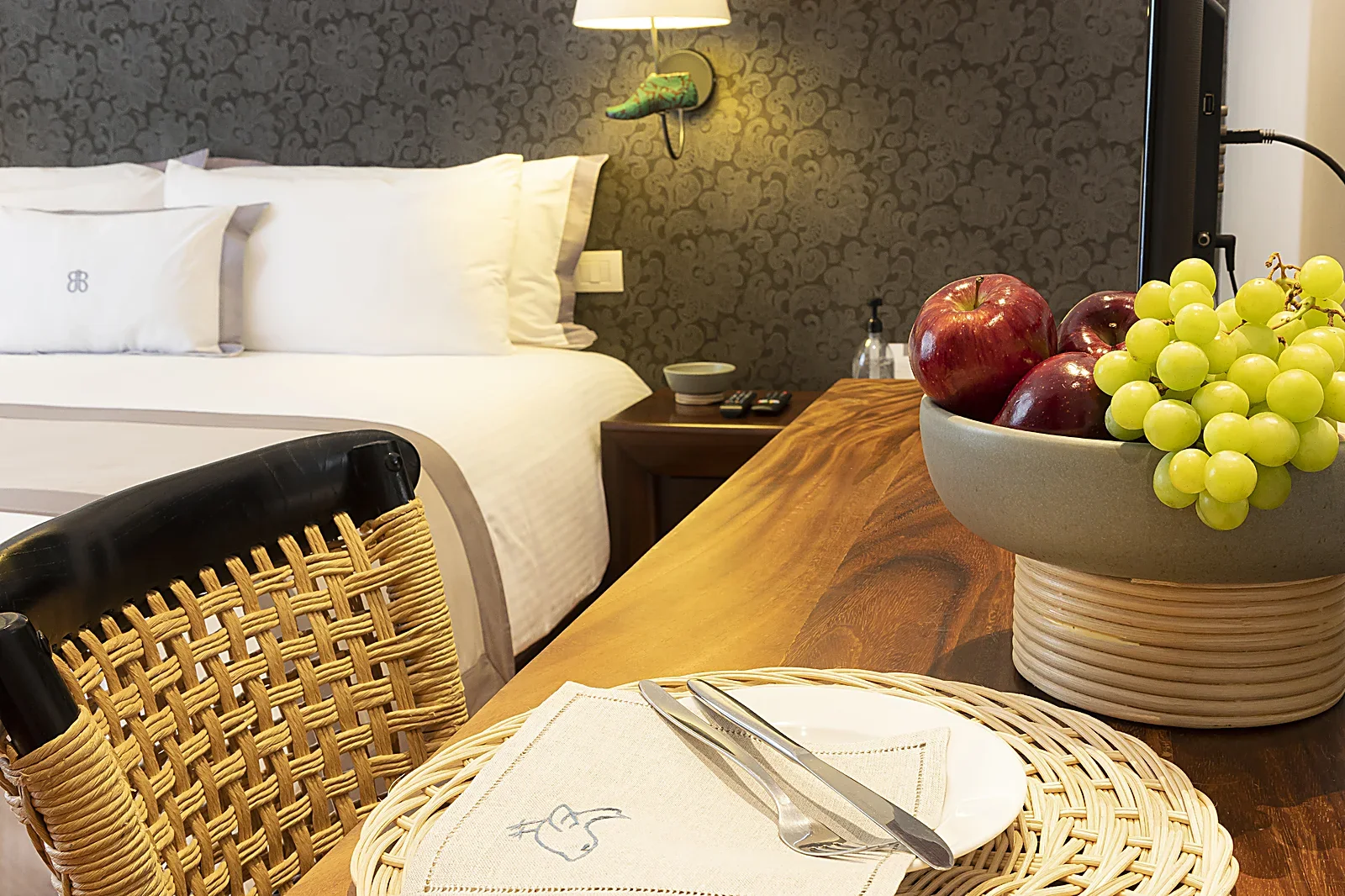
Starting point. Casa Goliana itself is an example of a restored early-20th-century single-family residence, with eclectic elements and a traditional interior courtyard.
Stop 2: Edificio Balmori (Orizaba 101)
Walk: 4 minutes. A Mexican Art Nouveau gem from 1922. Wrought-iron floral ornaments, curved balconies, and a spectacular interior staircase. Designed by Manuel Stampa.
Stop 3: Edificio Río de Janeiro (Plaza Río de Janeiro)
Walk: 3 minutes. Known as ‘the Witches’ House’ for its conical-roofed towers. Neo-Gothic Eclecticism from 1908, with a replica of Michelangelo’s David in the plaza out front.
Stop 4: Plaza Río de Janeiro
Same corner. Central public square of the neighborhood. Designed with fountain and trees. Saturday morning antique market.
Stop 5: Casa Lamm (Álvaro Obregón 99)
Walk: 5 minutes. An eclectic 1911 mansion now a cultural center with gallery and bookstore. Free entry. Lewis Lamm was a Swiss architect who built the house for himself.
Stop 6: Edificio Río Lerma
Walk: 6 minutes. Example of Mexican Art Deco from the 1930s. Geometric lines, stylized bas-reliefs.
Stop 7: Sagrada Familia Church (Puebla 144)
Walk: 4 minutes. A Neo-Gothic 1906 church, with original stained glass and a marble main altar. Baptismal site for much of Porfirian-era elite.
Stop 8: Frontón México (Western Edge)
Walk: 8 minutes. If you extend into Cuauhtémoc: monumental 1929 Art Deco, reopened in 2017 as a casino. Iconic façade. From there, a few steps away on Plaza de la República, rises the Monumento a la Revolución — another icon of monumental Art Deco and a fitting finale to the walk.
Stop 9: Casa Universitaria del Libro (Orizaba 24)
Walk: 6 minutes back. A French 1908 mansion, today a university bookstore. Original interior preserved.
Stop 10: Plaza Luis Cabrera
Walk: 4 minutes. Secondary plaza with fountain and a European café atmosphere. Surrounding buildings show the transition from Art Nouveau to early Modernism.
Stop 11: Colima Street Buildings (Block 100–200)
Walk: 5 minutes. A single block contains six catalogued buildings: Eclecticism, Art Nouveau, early Mexican Modernism.
Stop 12: Return to Casa Goliana
Walk: 4 minutes. Closing the route in the hotel courtyard with a coffee to process what you’ve seen.
How to Enrich the Tour
Pre-Reading
- Book: ‘La Roma’ by Cuauhtémoc Medina (multi-author). Available at Casa Bosques.
- App: ‘CDMX Histórica’ has a curated Roma Norte layer.
- Map: INBA National Catalogue of Historic Monuments.
Guided Tour
If you prefer an expert, several local guides specialized in architecture offer Roma Norte tours for $40–80 USD per person. The Casa Goliana team can recommend trusted guides.
When to Do This Tour
- Best: Saturday or Sunday morning (8:00–11:00 AM). Soft light, low traffic, antique market in Plaza Río de Janeiro.
- Acceptable: Weekdays at golden hour (5:00–7:30 PM). Spectacular light for photos.
- Avoid: Midday in May–June (strong sun) and afternoons during rainy season (June–September).
Conclusion
Roma Norte is not just a foodie or hipster neighborhood. It is an architectural time capsule that tells the story of how Mexico City tried to look European 120 years ago. Staying at Casa Goliana means living inside that story. For more cultural neighborhood routes, visit the Casa Goliana blog.